



Enroll in the ALS Care Locator
MEDICAL PRACTICE
REVIEW THE PIVOTAL STUDY DATA FOR RADICAVA® AND THE RESULTS FROM AN OBSERVATIONAL ANALYSIS FOR RADICAVA ORS® REVIEW NOW
Efficacy of RADICAVA®
For your appropriate patients, initiate treatment with RADICAVA ORS® (edaravone) upon diagnosis.1

RADICAVA ORS®: EQUIVALENT TO RADICAVA® as shown in phase 1 pharmacokinetic study plasma levels in healthy subjects under fasted conditions2
RADICAVA ORS® has the same efficacy as RADICAVA® (edaravone)—an FDA-approved treatment shown in a pivotal phase 3 clinical trial to help slow the loss of physical function in ALS3,4
Data from Pivotal Phase 3 Study MCI-186-J19
RADICAVA® study design: a 24-week randomized, placebo-controlled study3
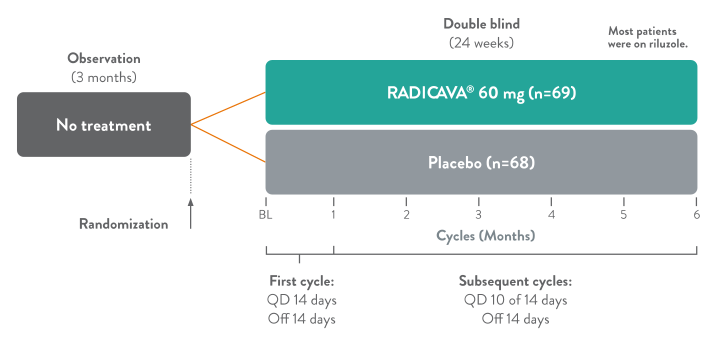
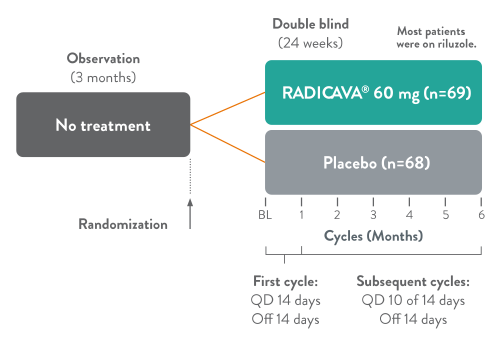
The pivotal phase 3 clinical trial was specifically designed to measure change in physical function assessed by the ALSFRS-R4-6
Patients were selected for relatively good function at baseline and adequate disease progression on the ALSFRS-R4
- At study entry4
- Definite ALS or probable ALS (El Escorial and revised Airlie House diagnostic criteria)
- Scores ≥2 on all items of the ALSFRS-R
- Grade 1 or 2 in Japan ALS severity classificationa (see footnote)
- Normal respiratory function (≥80% FVC)
- Disease duration ≤2 years
- Age 20-75
At randomization4
Deterioration in ALSFRS-R score of 1 to 4 points during 12-week pre-study observation period
The inclusion criteria of the pivotal clinical trial4:

Used a defined population based on an analysis of an earlier clinical trial
Identified patients who would be expected to have a sufficient and measurable deterioration over 24 weeks in order to see a treatment effect
RADICAVA ORS®: a treatment proven to help slow functional decline3,4
Data from pivotal phase 3 clinical trial
On average, patients on RADICAVA® lost 2.49 FEWER POINTS on the ALSFRS-R vs placebo3,4
Physical Function in Daily Activities at 24 Weeks3,4
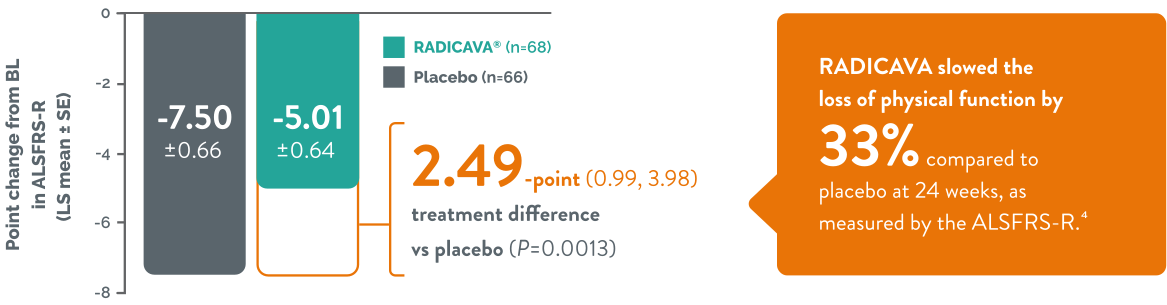
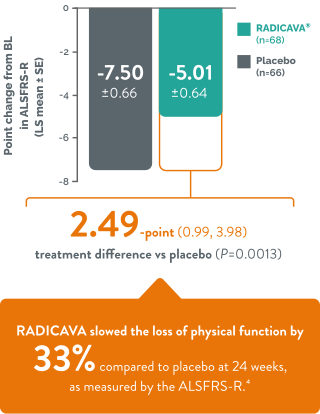
Over 90% of patients in each group were also being treated with riluzole.4,7
3X as many patients given RADICAVA® lost ≤2 points(39.1% RADICAVA® vs 13.2% placebo).3,8


“…the overall distribution shift suggests that the effect of slowing decline…was driven by the majority of patients responding to treatment rather than a response to treatment that was limited to a specific subtype of patient.”8
In the pivotal phase 3 clinical trial, patients on RADICAVA® lost fewer points and declined slower over time vs placebo4
Physical Function in Daily Activities at 24 Weeks4,7
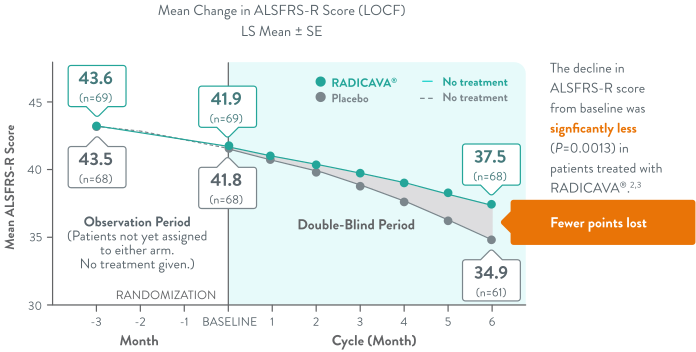
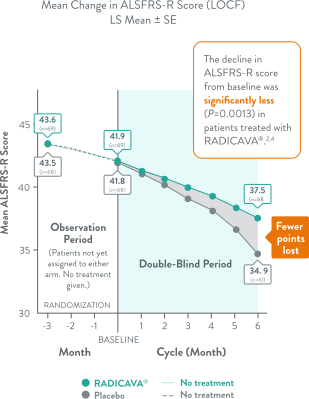
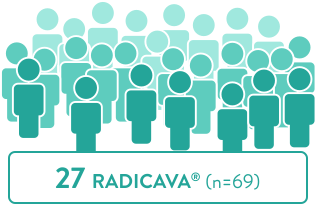
Most patients in the RADICAVA® and placebo arms were on riluzole4,7
91.3%
RADICAVA®
(n=63/69)
91.2%
Placebo
(n=62/68)
Consider RADICAVA ORS® (edaravone) in addition to riluzole upon diagnosis.1
The ALS Assessment Questionnaire (ALSAQ-40) is a patient self-reporting health status instrument. It is specifically used to measure the subjective well-being of patients with ALS.11
The ALSAQ-40 is scored from 0 (perfect health) to 100 (worst health).11
Treatment difference with edaravone10
ALSAQ-40 analysis of changes from baseline to Week 24
| Category | Placebo (SE) | Edaravone (SE) | Treatment difference (SE) |
|---|---|---|---|
| Total score | 26.44 (3.44) | 17.18 (3.35) | -9.26 (3.95) |
| Physical mobility | 7.47 (1.2) | 4.87 (1.17) | -2.59 (1.38) |
| ADL/independence | 9.06 (1.11) | 5.94 (1.08) | -3.12 (1.27) |
| Eating and drinking | 2.11 (0.37) | 0.78 (0.36) | -1.33 (0.43) |
| Communication | 4.17 (0.86) | 3.23 (0.84) | -0.94 (0.99) |
| Emotional functioning | 3.64 (1.18) | 2.37 (1.15) | -1.28 (1.36) |
Scroll horizontally to view all columns.
Adapted from Brooks BR, Pioro EP, Katz J, et al. Muscle Nerve. 2022;65(2):180-186.
ADL=activities of daily living.
Observational Analysis—ALSFRS-R change over 48 weeks
Takahashi F, Genge A, Hirai M, et al. The Pooled Resource Open-Access ALS Clinical Trials Consortium. Muscle Nerve. July 2025.*
Limitations
- This was a retrospective, external control analysis comparing patients from the RADICAVA ORS® clinical trials with historical placebo patients from the PRO-ACT database. Although propensity score matching was used to reduce bias, the analysis remains subject to limitations inherent to non-randomized comparisons, including potential residual confounding due to unmeasured or inadequately balanced variables. Differences in trial protocols, data collection methods, and supportive care over time may also limit comparability
- These data are considered exploratory. No adjustments were made for multiplicity, and the findings should be interpreted with caution given the retrospective nature of the analysis and use of external controls. Thus, no definitive conclusions can be drawn
*Data used in the preparation of this article were obtained from the PRO-ACT database. As such, the following organizations and individuals within the PRO-ACT Consortium contributed to the design and implementation of the PRO-ACT database and/or provided data, but did not participate in the analysis of the data or the writing of this report: ALS Therapy Alliance; Cytokinetics; Amylyx Pharmaceuticals; Knopp Biosciences; Neuraltus Pharmaceuticals; Neurological Clinical Research Institute at Mass General; Northeast ALS Consortium (NEALS); Novartis; Orion Corporation; Prize4Life Israel; Regeneron Pharmaceuticals, Inc.; Sanofi; Teva Pharmaceutical Industries Ltd.; The ALS Association; and the Sean M. Healey & AMG Center for ALS at Massachusetts General Hospital.
Key points covered in detail below
These PRO-ACT analyses are consistent with and provide additional supportive evidence to previously published studies.
They further demonstrate that RADICAVA ORS® helps slow functional decline in patients with ALS and include geographically and ethnically diverse populations from North America, Europe, and Asia.12
Expanding on existing evidence from the pivotal study (MCI-186-J19)
RADICAVA ORS® was investigated in clinical trials MT-1186-A01/A02/A03/A04.
While study J19 was conducted in a Japanese patient population with RADICAVA®, studies A01/A02/A03/A04 were conducted with RADICAVA ORS® in geographically and racially diverse patient populations.
Study MT-1186-A01
Study design:
A phase 3, global, multicenter, open-label study that evaluated the long-term safety and tolerability of RADICAVA ORS® 105 mg on/off dosing regimen over 48 weeks. The study enrolled 185 patients with ALS who had a baseline forced vital capacity ≥70% of predicted and disease duration ≤3 years.12,13
Results:
RADICAVA ORS® was well tolerated during 48 weeks of treatment, with no new safety concerns identified. The most common treatment-emergent adverse events (TEAEs) at week 48 were fall (22.2%), muscular weakness (21.1%), and constipation (17.8%).13
Study MT-1186-A03
Study design:
Provided up to 96 weeks of additional treatment in 124 patients with ALS who completed the initial 48 weeks of study MT-1186-A01.12,14
Results:
RADICAVA ORS® was well tolerated with no new safety concerns. The most common TEAEs were fall (16.9%), muscular weakness (14.5%), dyspnea (13.7%), constipation (12.9%), and dysphagia (12.1%). These TEAEs were consistent with the safety profile for RADICAVA from previous clinical trials.14
Study MT-1186-A02
Study design:
A phase 3b, multicenter, double-blind, parallel-group, randomized study that evaluated whether investigational, once-daily RADICAVA ORS® dosing was superior to the approved on/off dosing based on combined assessment of function and survival and assessed safety and tolerability over 48 weeks in 383 patients with ALS. The study enrolled 384 patients who had definite or probable ALS, baseline forced vital capacity ≥70%, and baseline disease duration ≤2 years. This study was a post-marketing commitment following the FDA approval of RADICAVA® (edaravone).12,15
Results:
At week 48, the once-daily regimen did not show superiority to the FDA-approved on/off dosing regimen based on the primary efficacy endpoint of CAFS score, as there was no statistically significant difference between the 2 treatment groups. RADICAVA ORS® was generally well tolerated and no new safety concerns were identified in either group.15
Study MT-1186-A04
Study design:
Provided up to 48 weeks of additional treatment in 192 patients with ALS who completed the initial 48 weeks of study MT-1186-A02.12,15
Results:
At week 96, once-daily dosing did not show a statistically significant difference vs FDA-approved on/off dosing in time to ≥12-point decrease in ALSFRS-R or death. RADICAVA ORS® was generally well tolerated and no new safety concerns were identified in either group.15
RADICAVA ORS was investigated in clinical trials MT-1186-A01/A02/A03/A04
- Patients from studies A02/A04 (prespecified analysis) and studies A01/A02/A03/A04 (post hoc analysis) were propensity score matched 1:1 on 10 baseline variables with historical PRO-ACT placebo patients to assess the impact of RADICAVA ORS® on function
- To account for imbalances in participant characteristics between each group, patients were propensity score matched to adjust for baseline covariates
- Data for the historical, external control patients with ALS who had not received active investigational treatment but may have received riluzole in their respective clinical trials were obtained from the PRO-ACT database12
About the PRO-ACT database
PRO-ACT Dataset is the world’s largest ALS clinical trial data repository, compiling placebo and treatment-arm data from 36 phase II/III clinical trials and over 12,500 fully anonymized longitudinal Subject records funded by:
- The ALS Therapy Alliance
- Prize4Life, Inc.
- Northeast ALS Consortium (NEALS)
- Neurological Clinical Research Institute of Mass. General Hospital
- Finding A Cure
- The ALS Association
The Neurological Clinical Research Institute of Mass. General Hospital created and maintained the PRO-ACT Dataset and serves as the coordinating center and data distributor of the PRO-ACT Dataset. Find out more at www.alsdata.org
Key inclusion criteria
In the prespecified primary analysis cohort (A02/A04), the following key inclusion criteria were applied for both treated and PRO-ACT placebo groups12:
- Definite ALS or probable ALS per El Escorial revised Airlie House diagnostic criteria
- ≥18 to 75 years of age
- ≥2 points on each individual ALSFRS-R item at baseline
- ≥70% respiratory function (baseline % FVC or % SVC)
- ≤2 years between first symptom of ALS and informed consent
- 1- to 4-point decline in total ALSFRS-R score during 8 weeks (±7 days) between screening and baseline visits (RADICAVA ORS®-treated group only)
Endpoint for data shown on this page
Change in ALSFRS-R score from baseline up to week 4812
Results: ALSFRS-R functional change
Endpoint: change in ALSFRS-R score from baseline up to 48 weeks
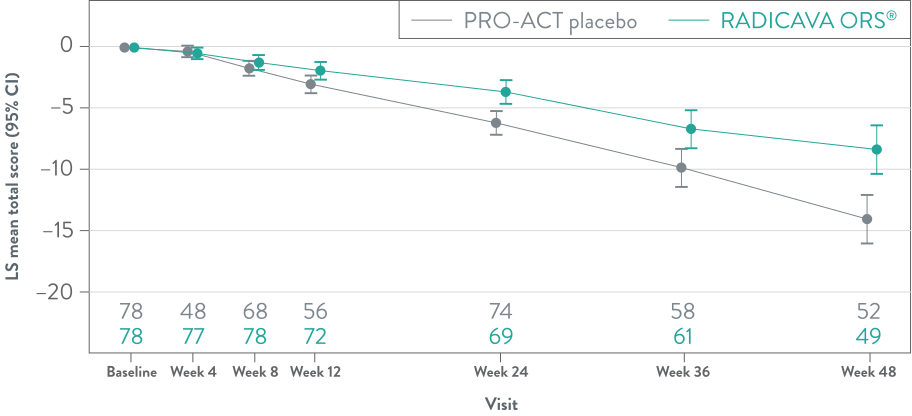
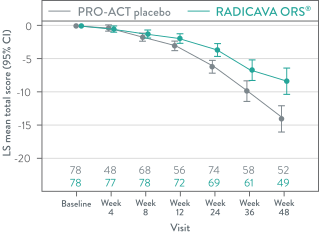
- In the primary propensity score–matched analysis cohort (N=156), change from baseline ALSFRS-R score in patients in the combined RADICAVA ORS® (edaravone) (n=78) vs PRO-ACT placebo (n=78) groups were examined
- Patients in both groups had a mean baseline ALSFRS-R score of 41.0 points (Table 1, Figure 1)12
Table 1: From baseline ALSFRS-R to total score change in cohort groups at week 4812

The LS mean ± SE ALSFRS-R total score change from baseline to week 48 was smaller in the combined RADICAVA ORS® group (-8.4 ± 1.0 points) vs PRO-ACT placebo group (-14.1 ±1.0 points).
LIMITATION: These data are considered exploratory. No adjustments were made for multiplicity, and the findings should be interpreted with caution given the retrospective nature of the analysis and use of external controls. Thus, no definitive conclusions can be drawn.
Comparison of ALSFRS-R functional change at 48 weeks
Figure 1: ALSFRS-R total score change over 48 weeks in the propensity score–matched combined study A02 and A04 RADICAVA ORS® group vs PRO-ACT placebo group12
Post hoc analysis in a broader population
- In the post hoc propensity score–matched analysis cohort that included the broader group of ALS patients from studies A01/A02/A03/A04, patients in the RADICAVA ORS® group (n=210) vs PRO-ACT placebo group (n=210) started at a mean baseline ALSFRS-R score of 39.1 and 38.9 points, respectively12
- At week 48, the LS mean (± SE) change from baseline in ALSFRS-R total score was −10.5 ± 0.7 points in the RADICAVA ORS® group and −12.9 ± 0.6 points in the PRO-ACT placebo group12

It is very important to let patients know that3:
- RADICAVA ORS® is an ongoing treatment for ALS
- It is not a cure
- It does not restore function
- Individual results may vary
ALS can progress rapidly.16 Beginning treatment with RADICAVA ORS® can be meaningful in slowing the loss of physical function.4,17

RADICAVA ORS®—the ONLY FDA-approved oral form of edaravone—was built on years of clinical research and development

aJapan ALS severity classification grades, which were used for the pivotal clinical trial (J19), range from 1 to 5 as follows4,18:
1. Able to work or perform housework. 2. Independent living but unable to work. 3. Requiring assistance for eating, excretion, or ambulation. 4. Presence of respiratory insufficiency, difficulty in coughing out sputum, or dysphagia. 5. Using a tracheostomy tube, tube feeding, or tracheostomy positive-pressure ventilation. Return to content
ADL=activities of daily living; ALS=amyotrophic lateral sclerosis; ALSAQ-40=Amyotrophic Lateral Sclerosis Assessment Questionnaire-40; ALSFRS-R=ALS Functional Rating Scale–Revised; BL=baseline; CAFS=combined assessment of function and survival; CI=confidence interval; FVC=forced vital capacity; LS=least squares; PRO-ACT=Pooled Resource Open-Access ALS Clinical Trials; QD=once daily; SD=standard deviation; SE=standard error.
References: 1. Leigh PN, Swash M, Iwasaki Y, et al. Amyotrophic lateral sclerosis: a consensus viewpoint on designing and implementing a clinical trial. Amyotroph Lateral Scler Other Motor Neuron Disord. 2004;5(2):84-98. 2. Shimizu H, Nishimura Y, Shiide Y, et al. Bioequivalence study of oral suspension and intravenous formulation of edaravone in healthy adult subjects. Clin Pharmacol Drug Dev. 2021;10(10):1188-1197. 3. RADICAVA and RADICAVA ORS [package insert]. Florham Park, NJ: Shionogi Inc. 4. Writing Group; Edaravone (MCI-186) ALS 19 Study Group. Safety and efficacy of edaravone in well defined patients with amyotrophic lateral sclerosis: a randomised, double-blind, placebo-controlled trial. Lancet Neurol. 2017 Jul;16(7):505-512. 5. Takei K, Tsuda K, Takahashi F, et al. Post-hoc analysis of open-label extension period of study MCI186-19 in amyotrophic lateral sclerosis. Amyotroph Lateral Scler Frontotemporal Degener. 2017;18(suppl 1):64-70. 6. Cedarbaum JM, Stambler N, Malta E, et al; BDNF ALS Study Group (Phase III). The ALSFRS-R: a revised ALS functional rating scale that incorporates assessments of respiratory function. J Neurol Sci. 1999;169(1-2):13-21. 7. Data on file. Shionogi Inc. 8. Takei K, Takahashi F, Liu S, et al. Post-hoc analysis of randomised, placebo-controlled, double-blind study (MCI186-19) of edaravone (MCI-186) in amyotrophic lateral sclerosis. Amyotroph Lateral Scler Frontotemporal Degener. 2017;18(suppl 1):49-54. 9. Castrillo-Viguera C, Grasso DL, Simpson E, et al. Clinical significance in the change of decline in ALSFRS-R. Amyotroph Lateral Scler. 2010;11(1-2):178-180. 10. Brooks BR, Pioro EP, Katz J, et al. Slowing the loss of physical function in amyotrophic lateral sclerosis with edaravone: post hoc analysis of ALSFRS-R item scores in pivotal study MCI186-19. Muscle Nerve. 2022;65(2):180-186. 11. Jenkinson C, Harris R, Fitzpatrick R. The Amyotrophic Lateral Sclerosis Assessment Questionnaire (ALSAQ-40): Evidence for a method of imputing missing data. Amyotroph Lateral Scler. 2007;8(2):90-95. 12. Takahashi F, Genge A, Hirai M, et al. Analysis of long-term function and survival of edaravone oral suspension–treated patients with amyotrophic lateral sclerosis using PRO-ACT data as historical placebo controls. Muscle Nerve. Published online July 1, 2025. doi:10.1002/mus.28462 13. Genge A, Pattee GL, Sobue G, et al. Oral edaravone demonstrated a favorable safety profile in patients with amyotrophic lateral sclerosis after 48 weeks of treatment. Muscle Nerve. 2023;67:124-129. 14. Genge A, Pattee GL, Sobue G, et al. Safety extension study of edaravone oral suspension in patients with amyotrophic lateral sclerosis for up to an additional 96 weeks of treatment. Muscle Nerve. Published online June 9, 2025. doi:10.1002/mus.28451 15. Rothstein J, Genge A, De Silva S, et al. Efficacy and safety of once daily dosing vs approved on/off dosing of edaravone oral suspension up to 48 weeks in patients with amyotrophic lateral sclerosis (study MT-1186-A02). Muscle Nerve. Published online June 6, 2025. doi:10.1002/mus.28448 16. Sawada H. Considerations for pharmacotherapy use in patients with amyotrophic lateral sclerosis: the earlier it starts, the better the results. Expert Opin Pharmacother. 2019;20(14):1671-1674. 17. Samadhiya S, Sardana V, Bhushan B, et al. Assessment of therapeutic response of edaravone and riluzole combination therapy in amyotrophic lateral sclerosis patients. Ann Indian Acad Neurol. 2022;25(4):692-697. 18. Kalin A, Medina-Paraiso E, Ishizaki K, et al. A safety analysis of edaravone (MCI-186) during the first six cycles (24 weeks) of amyotrophic lateral sclerosis (ALS) therapy from the double-blind period in three randomized, placebo-controlled studies. Amyotroph Lateral Scler Frontotemporal Degener. 2017;18(suppl 1):71-79.
